
Japan Earthquake Today: 5.9 Magnitude Earthquake Hits Near Tokyo 
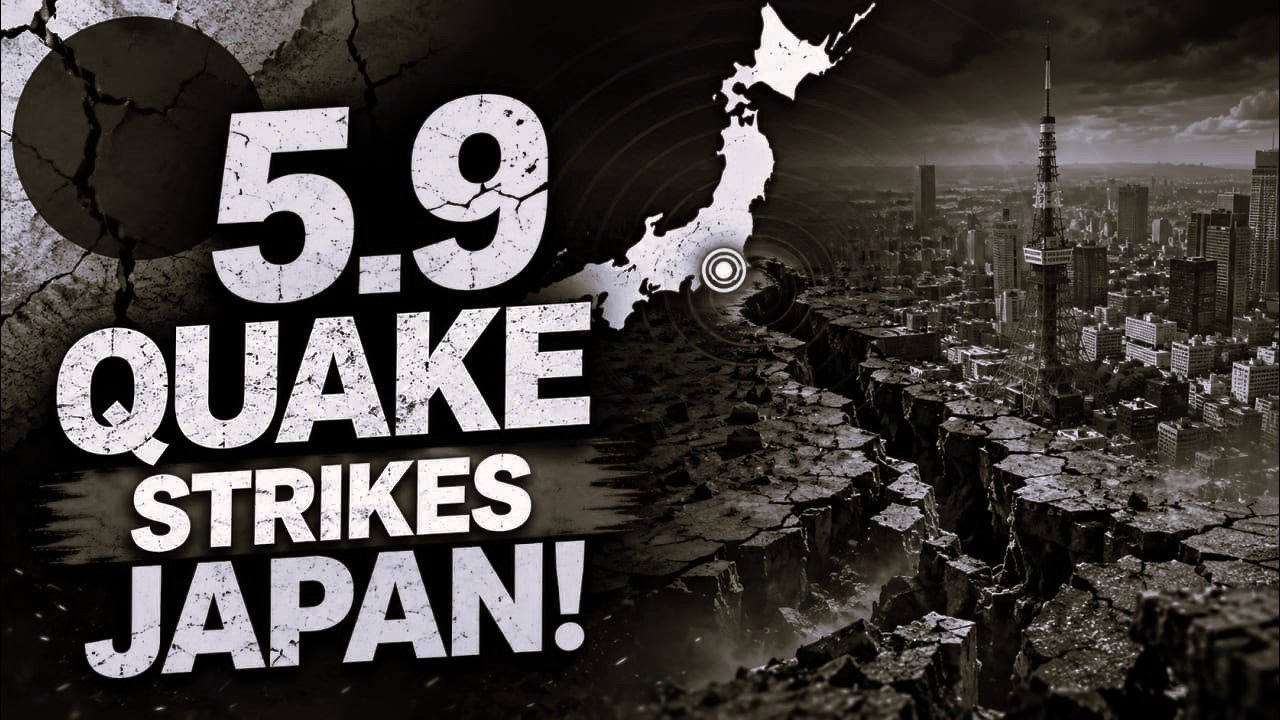
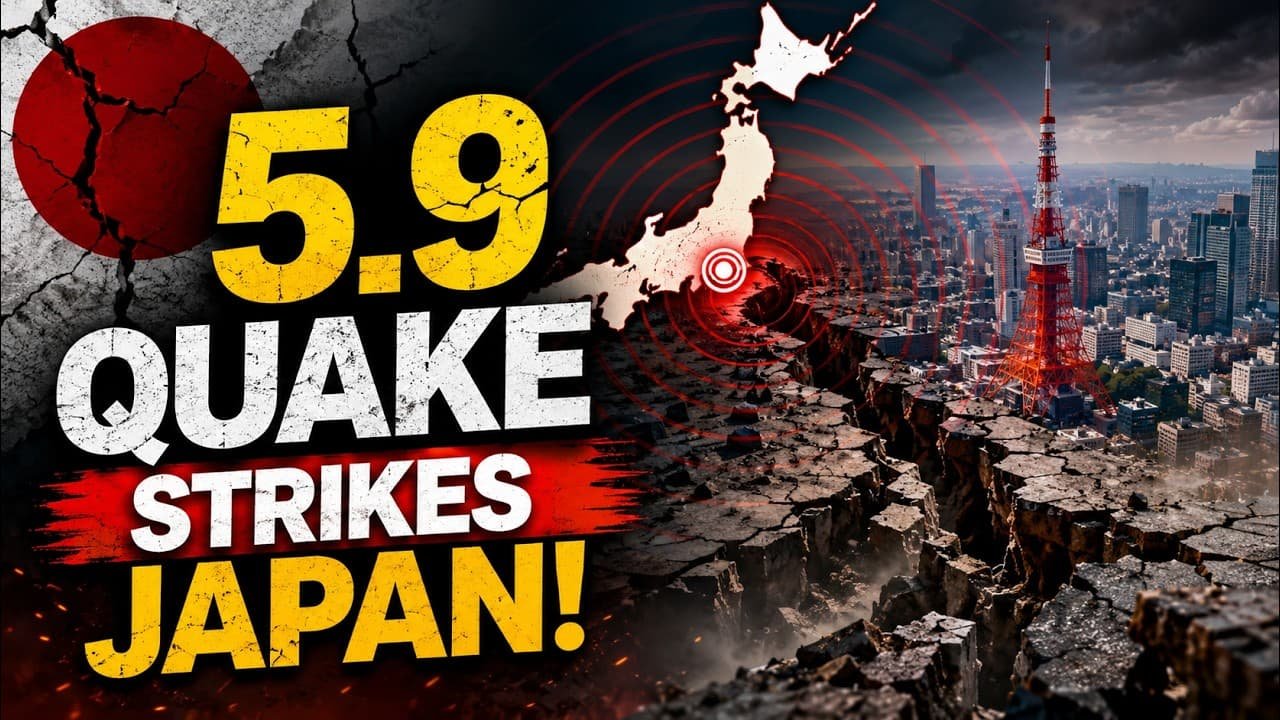
A 5.9-magnitude earthquake struck eastern Japan early Sunday, August 23, 2026, sending strong tremors across Tokyo and several surrounding prefectures.
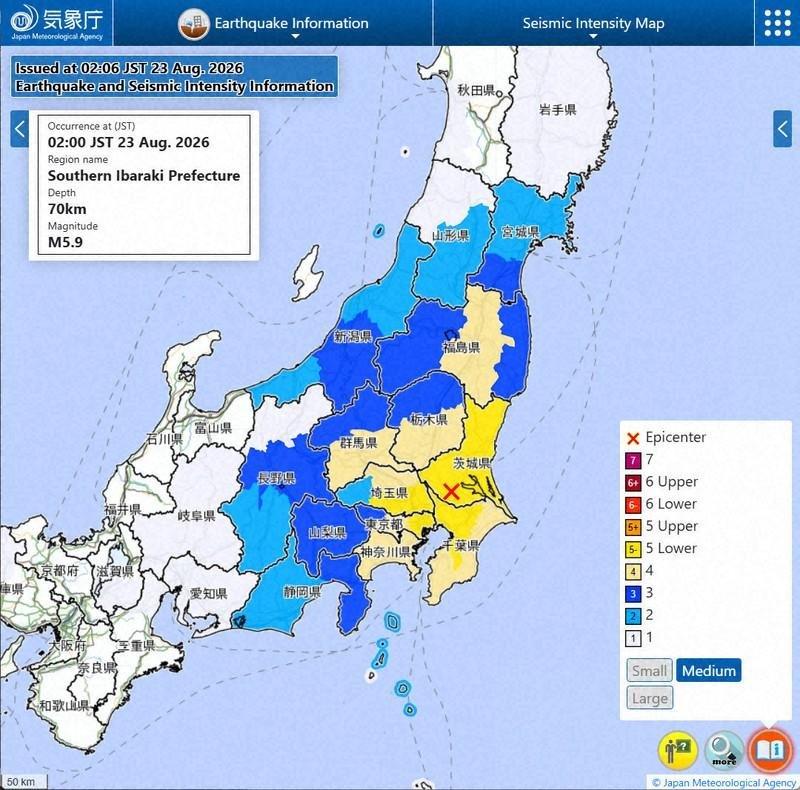
The earthquake occurred in southern Ibaraki Prefecture at a depth of approximately 68 to 70 kilometres. The Japan Meteorological Agency recorded the earthquake at magnitude 5.9, while the United States Geological Survey measured it at 5.8.
The powerful shaking triggered emergency alerts on mobile phones and was felt strongly across the Tokyo metropolitan area.
According to the latest reports, at least 37 people were injured across five prefectures, although most injuries were minor.
Japan Earthquake Today: Latest Update
The earthquake struck at approximately 2:00 a.m. local time on Sunday.
Southern Ibaraki was identified as the epicentre, while strong shaking was reported in parts of Tokyo, Saitama, Chiba and Kanagawa.
The earthquake reached a maximum intensity of lower 5 on Japan's seven-level seismic intensity scale in several locations.
Tokyo's Adachi Ward also experienced lower-5 intensity shaking.
How Strong Was the Japan Earthquake?
The Japan Meteorological Agency estimated the earthquake at magnitude 5.9.
The United States Geological Survey recorded a preliminary magnitude of 5.8.
The epicentre was approximately 68 kilometres beneath southern Ibaraki Prefecture.
Although the earthquake was not among Japan's largest earthquakes, its shallow-to-moderate depth and location near the densely populated Kanto region resulted in strong shaking across a wide area.
How Many People Were Injured?
The latest official figures indicate that 37 people were injured across Tokyo and four neighbouring prefectures.
The reported injuries occurred in:
- Tokyo
- Saitama
- Kanagawa
- Chiba
- Ibaraki
Most injuries were minor and occurred when people fell or collided with furniture and doors after being startled awake by the earthquake.
One elderly woman in Yokohama reportedly suffered a serious hip injury after falling from her bed
Was Tokyo Hit by the Earthquake?
Yes.
The earthquake was strongly felt in Tokyo and the surrounding Kanto region.
Emergency earthquake alerts were sent to mobile phones, while residents reported strong shaking in several parts of the capital.
The shaking also affected high-rise buildings, where earthquake movement can feel particularly pronounced because structures may sway during seismic activity.
Was There a Tsunami Warning?
No tsunami threat was reported.
Japanese authorities confirmed that the earthquake did not generate a tsunami danger for the region.
This was an important distinction because Japan is highly vulnerable to tsunami events following major offshore earthquakes.
Were Japan's Nuclear Plants Affected?
There were no reported abnormalities at nearby nuclear facilities following the earthquake.
Authorities checked nuclear facilities including the Tokai No. 2 nuclear power plant in Ibaraki.
No immediate problems were reported at the facilities following the tremor.
Train Services Disrupted After Earthquake
The earthquake also affected transportation in the Tokyo region.
Some express trains serving Tokyo and Narita Airport were delayed, while several local railway services in northeastern areas were temporarily disrupted.
Railway operators carried out safety checks following the strong shaking.
However, Shinkansen bullet train services continued operating normally, according to reports.
Water Pipe Bursts in Tokyo
The earthquake also caused limited infrastructure damage.
An underground water pipe ruptured in Tokyo's Koto Ward, resulting in water flowing onto a road.
The pipe was later repaired.
Temporary power disruptions were also reported in parts of Tokyo before electricity services were resto
Japan Issues Aftershock Warning
The Japan Meteorological Agency has urged residents in areas that experienced strong shaking to remain cautious about possible aftershocks.
The agency warned that another moderate earthquake could occur during approximately the following week.
Residents in affected areas have therefore been advised to remain prepared and follow official instructions if additional shaking occurs.
Why Does Japan Experience So Many Earthquakes?
Japan is located along one of the world's most active seismic zones.
The country sits near several tectonic plate boundaries, making earthquakes a frequent natural hazard.
Japan has developed some of the world's most advanced earthquake-warning systems, building standards and emergency-response procedures because of this constant seismic risk.
The country's mobile earthquake-alert system can warn residents seconds before or during strong shaking, depending on the distance from the earthquake's epicentre.
Earthquake Alerts Reached Tokyo Residents
One of the most noticeable features of Sunday's earthquake was the activation of Japan's emergency warning system.
Residents received alerts on their smartphones shortly before or as the strongest shaking arrived.
These systems are designed to provide people with valuable seconds to take protective action.
For people inside homes, offices or shops, even a few seconds can provide enough time to move away from falling objects or take cover.
What Should People Do During an Earthquake?
Japanese authorities regularly advise residents to follow basic earthquake safety procedures.
During strong shaking, people should:
- Stay indoors if already inside and move away from windows.
- Protect the head and neck.
- Take cover under a sturdy table when possible.
- Avoid elevators during or immediately after strong shaking.
- Check for falling objects before moving.
- Follow official emergency announcements.
- Prepare for possible aftershocks.
People outside should stay away from damaged buildings, utility lines and other potentially dangerous structures.
Could Another Earthquake Happen?
Aftershocks are possible following an earthquake.
The Japan Meteorological Agency has specifically urged caution for about a week in areas that experienced strong shaking.
However, authorities cannot accurately predict the exact time, location or magnitude of a future earthquake.
Residents should therefore remain prepared without assuming that another major earthquake will definitely occur.
Japan Earthquake and Tokyo's Infrastructure
Tokyo is one of the world's largest metropolitan areas, with extensive transportation, electricity, water and communication infrastructure.
A major earthquake in or near the capital could potentially have significant consequences.
Sunday's earthquake provides another reminder of why Tokyo maintains strict building regulations and emergency-response systems.
Despite the strong shaking, the latest reports indicate that the overall infrastructure impact from this earthquake remained limited.
Impact on Japan's Transport Network
Japan's railway system is designed to respond rapidly to earthquake activity.
When strong shaking is detected, trains can automatically slow down or stop while operators inspect tracks and infrastructure.
This can cause delays even when there is no major physical damage.
Sunday's earthquake resulted in temporary disruption to several train services, while major Shinkansen services remained operational.
Is Tokyo Safe After the Earthquake?
Authorities have not reported a major disaster across Tokyo following the earthquake.
There was no tsunami threat, nuclear facilities reported no abnormalities, and most reported injuries were minor.
However, the possibility of aftershocks means residents in affected areas should continue monitoring official information.
Japan Earthquake Today: Key Facts
- Date: August 23, 2026
- Magnitude: 5.9 according to Japan Meteorological Agency
- USGS magnitude: 5.8
- Epicentre: Southern Ibaraki Prefecture
- Depth: Approximately 68–70 kilometres
- Tokyo affected: Yes
- Reported injuries: At least 37
- Tsunami threat: None reported
- Train services: Some delays and disruptions
- Shinkansen: Operating normally
- Nuclear facilities: No reported abnormalities
- Aftershock risk: Authorities advise caution for about one week
Japan Earthquake Today: What Happens Next?
Japanese authorities will continue monitoring the affected areas for additional seismic activity and possible damage.
Emergency agencies are assessing infrastructure, while railway operators continue safety inspections.
Residents are expected to remain alert for possible aftershocks and follow information from the Japan Meteorological Agency and local authorities.
The earthquake has once again highlighted the importance of Japan's earthquake preparedness, particularly in the densely populated Tokyo metropolitan region.
Conclusion
The Japan earthquake today was a significant seismic event that shook eastern Japan and the Tokyo metropolitan area early on August 23, 2026.
The magnitude 5.9 earthquake originated in southern Ibaraki Prefecture and produced strong shaking across several parts of the Kanto region.
At least 37 people were injured, some transportation services were disrupted and limited infrastructure damage was reported. However, there was no tsunami threat and no reported abnormalities at nearby nuclear facilities.
Authorities are now focusing on damage assessments and monitoring for possible aftershocks.
For residents of Tokyo and surrounding prefectures, the latest earthquake serves as another reminder that preparation and rapid response remain essential in one of the world's most earthquake-prone regions.
Disclaimer: This article is based on publicly available information and official/local reports available on August 23, 2026. Earthquake injury figures, damage assessments and official warnings may change as authorities continue their investigations.




Comments (0)