
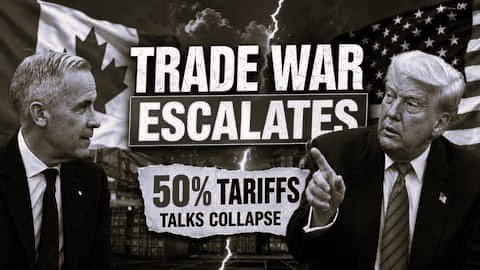
US–Canada Trade War 2026: 50% Tariffs Take Effect as Trade Talks Collapse
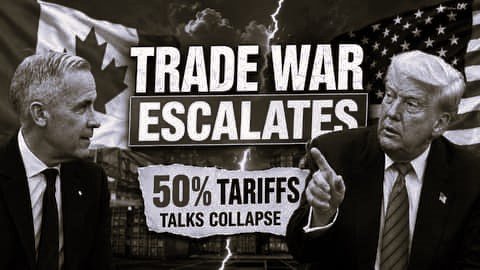
The US–Canada trade war in 2026 has entered a new and more serious phase after last-minute negotiations between Washington and Ottawa failed to produce a trade agreement.
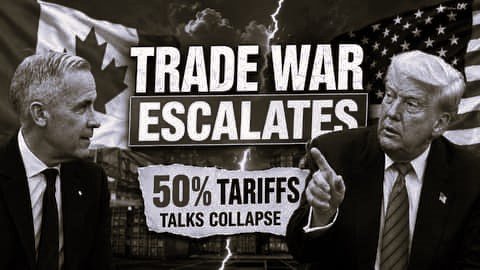
The United States has imposed new 50% tariffs on approximately $20 billion worth of Canadian goods, while Canadian Prime Minister Mark Carney has announced that Canada will respond with matching measures.
The development marks a significant escalation between two countries that have historically maintained one of the world's largest and most integrated trading relationships.
The latest dispute could affect businesses, workers, consumers and supply chains across North America.
US Imposes 50% Tariffs on Canadian Goods
The new US tariffs took effect on August 22, 2026, following the breakdown of trade negotiations.
The measures target a relatively limited portion of Canada's exports to the United States, representing around 5% of Canada's exports to its southern neighbour.
Affected products include items such as hockey equipment, wooden products, dairy-related goods and other Canadian imports.
Although the affected goods represent a smaller share of overall bilateral trade, the decision has significant political and economic implications.
Why Did the US–Canada Trade Talks Fail?
US and Canadian negotiators had been working toward an agreement that could have prevented the new tariffs.
However, negotiations broke down after disagreements over the final terms.
Canada accused Washington of making significant changes and demands at the last stage of negotiations.
The US administration, meanwhile, argued that Canada was unwilling to provide sufficient concessions on issues including market access and trade restrictions.
The failure of the talks ultimately resulted in the 50% tariffs taking effect.
Canada Promises Dollar-for-Dollar Retaliation
Canadian Prime Minister Mark Carney has responded strongly to the US decision.
Canada has announced that it will match the new US tariffs with retaliatory measures on American goods.
Carney described the US action as unfair and said Canada would protect its workers and businesses from the economic impact.
The Canadian government has also suspended formal trade negotiations with Washington following the breakdown.
What Are Tariffs?
A tariff is a tax imposed on imported goods.
When the US places a 50% tariff on a Canadian product, the importer generally becomes responsible for paying the tariff at the border.
The additional cost can then be absorbed by businesses, passed through supply chains or ultimately reflected in consumer prices.
This is why tariffs can affect people who are not directly involved in international trade.
How Could 50% Tariffs Affect Consumers?
The impact on American consumers will depend on which products are affected and how much businesses pass the additional costs on to customers.
Higher import costs can increase prices for certain products.
Canadian businesses exporting to the United States may also face pressure to reduce prices in order to remain competitive.
In some cases, companies may search for alternative suppliers or move production to different locations.
Impact on Canadian Businesses
Canadian exporters selling affected products to the United States could face significant challenges.
A 50% tariff can make Canadian products considerably more expensive in the US market.
Businesses may therefore need to:
- Reduce costs
- Find alternative markets
- Adjust product prices
- Change suppliers
- Reduce production
- Delay investment
- Explore new export destinations
Smaller companies could face particular difficulties because they often have fewer resources to absorb sudden increases in trade costs.
Impact on American Businesses
US companies that rely on Canadian products may also face higher costs.
Canada supplies the United States with a wide range of raw materials, manufactured goods, food products and industrial inputs.
If companies cannot quickly find alternative suppliers, the additional tariff costs could affect production and pricing.
This means the economic impact of tariffs can extend beyond the country being targeted.
US–Canada Trade Relationship
The United States and Canada have one of the world's largest bilateral trading relationships.
Their economies are deeply connected through manufacturing, energy, agriculture, transportation and supply chains.
Companies on both sides of the border often rely on components and materials that cross the border multiple times before a finished product reaches consumers.
This integration makes a prolonged trade conflict particularly significant.
Impact on the Automotive Industry
The North American automotive industry is highly integrated.
Vehicle manufacturers and parts suppliers operate across the United States, Canada and Mexico.
Tariffs can increase the cost of imported components and create additional uncertainty for manufacturers.
Companies may need to reconsider sourcing strategies, production locations and investment decisions if tariff uncertainty continues.
Impact on Canada's Economy
Canada could face pressure if the trade dispute continues for an extended period.
The United States remains Canada's most important trading partner, making access to the US market extremely important for Canadian exporters.
Potential economic effects include:
- Lower exports
- Higher business costs
- Reduced investment
- Pressure on employment
- Higher prices for some products
- Supply-chain disruptions
- Lower business confidence
The Canadian government has said it will introduce additional support measures for affected workers and businesses.
Could the Trade War Increase Inflation?
One of the major concerns surrounding tariffs is inflation.
If tariffs increase the cost of imported products, businesses may pass some of those costs to consumers.
Higher prices could contribute to inflationary pressure.
However, the overall effect depends on the size of the tariffs, how long they remain in place, exchange rates, consumer demand and whether businesses absorb part of the additional costs.
Impact on Global Trade
The US–Canada dispute could also have consequences beyond North America.
The two countries are major participants in global supply chains.
A prolonged trade conflict could encourage companies to diversify their suppliers and reconsider where they manufacture products.
Other countries could potentially benefit if businesses begin searching for alternative sources outside the United States and Canada.
What Does This Mean for USMCA?
The escalation also raises questions about the future of the United States-Mexico-Canada Agreement (USMCA).
The agreement was designed to support trade and economic integration between the three North American economies.
Continued tariff disputes could make future negotiations more complicated and increase uncertainty for companies operating across the region.
Donald Trump and Canada Trade Policy
US President Donald Trump has repeatedly used tariffs as a major part of his trade policy.
His administration argues that tariffs can protect American industries, increase domestic production and pressure trading partners to make concessions.
Canada has strongly disputed Washington's approach and has criticized the latest tariff decision.
The latest confrontation demonstrates how trade policy has become an important part of US–Canada economic relations.
Mark Carney's Response
Canadian Prime Minister Mark Carney has taken a firm position against the new US tariffs.
His government has promised to respond to the US measures while also supporting Canadian workers and businesses affected by the trade dispute.
Carney has also criticized what Canada considers unfair changes to the negotiations at the final stage.
Will the US and Canada Resume Negotiations?
For now, the formal trade negotiations have been suspended.
There is no confirmed timetable for a new round of talks.
However, the economic pressure created by tariffs could eventually encourage both governments to return to negotiations.
Businesses on both sides of the border have a strong interest in reducing uncertainty and maintaining predictable access to their largest markets.
What Happens Next?
The next stage of the dispute will depend on how strongly Canada implements its retaliatory measures and whether Washington changes its position.
Markets and businesses will closely monitor:
- Canadian retaliation
- US tariff enforcement
- Consumer prices
- Business investment
- Automotive production
- Cross-border trade
- Employment
- Inflation
- Future USMCA negotiations
If the dispute continues, companies may begin making long-term changes to their supply chains.
US–Canada Trade War 2026: Key Points
- The US has imposed new 50% tariffs on approximately $20 billion of Canadian goods.
- The tariffs took effect on August 22, 2026.
- The affected products represent around 5% of Canada's exports to the United States.
- US–Canada trade negotiations collapsed before the tariff deadline.
- Canada has suspended the current trade talks.
- Prime Minister Mark Carney has promised dollar-for-dollar retaliation.
- The dispute could increase costs for businesses and consumers.
- North American supply chains could face additional uncertainty.
- The automotive and manufacturing sectors could be particularly sensitive to prolonged tariff measures.
- The dispute could complicate future USMCA negotiations.
Conclusion
The latest US–Canada trade war represents a major escalation in economic tensions between two closely connected economies.
The United States' decision to impose 50% tariffs on approximately $20 billion of Canadian goods has triggered an immediate Canadian response and brought trade negotiations to a halt.
While the tariffs directly affect only a portion of Canada's exports to the United States, the wider consequences could be much larger if the dispute continues.
Businesses may face higher costs, supply chains could become more complicated and consumers could eventually see price increases on some products.
The biggest question now is whether Washington and Ottawa can return to negotiations before the dispute causes deeper economic damage.
For the United States, Canada and the wider global economy, the next few weeks could be crucial in determining whether the latest tariff escalation becomes a temporary confrontation or develops into a prolonged North American trade war.
Disclaimer: This article is based on publicly reported information available on August 22, 2026. Tariff policies, negotiations and government responses can change rapidly. Readers should verify the latest official announcements before making financial or business decisions.




Comments (0)